What we make / Custom Car & Truck Decals
Vehicle & trailer graphicsCustom Car & Truck Decals
Decals for your own car, truck, Jeep, golf cart or ATV — cut vinyl or printed, matched to your paint, shipped free across Canada.
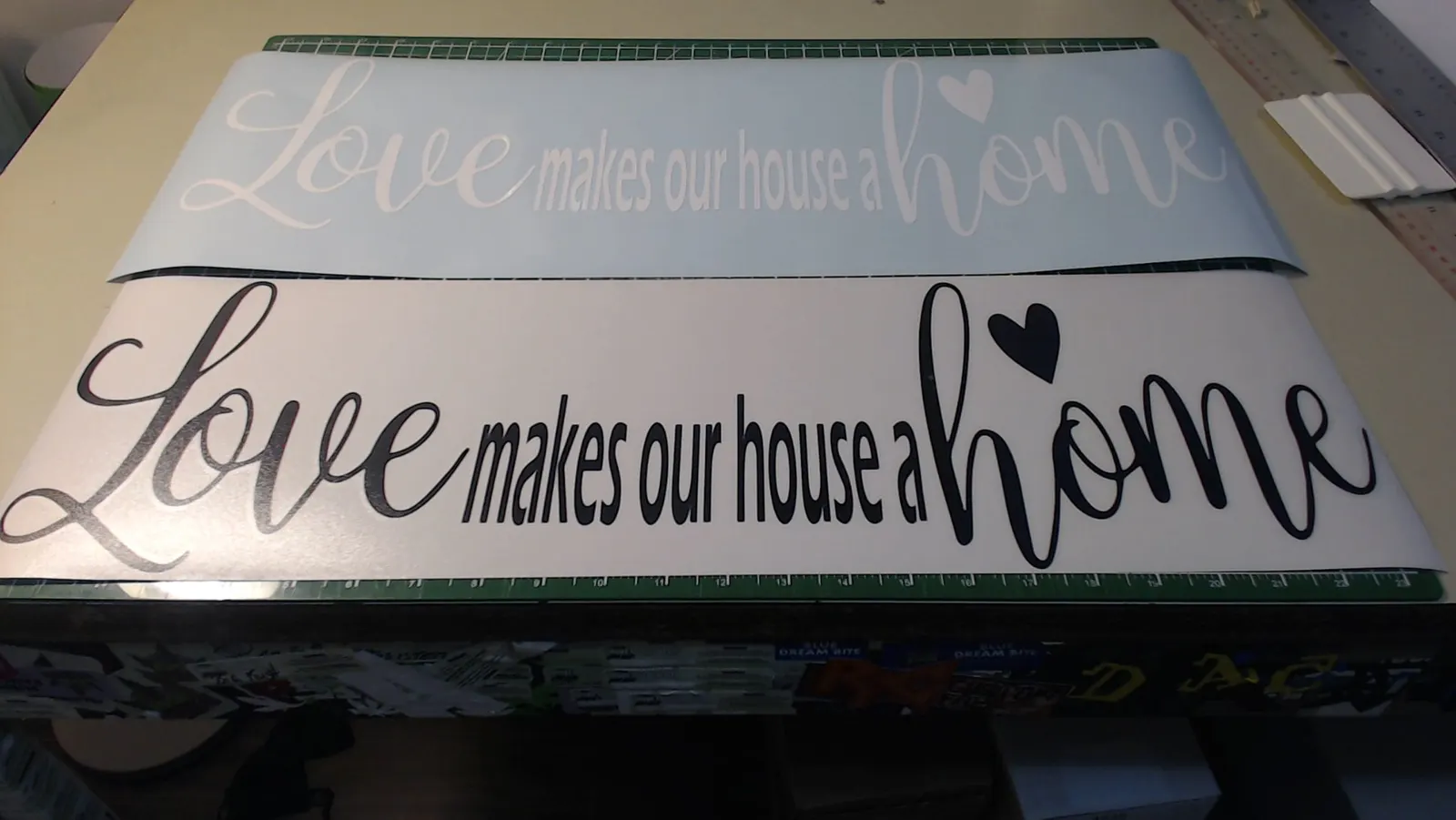
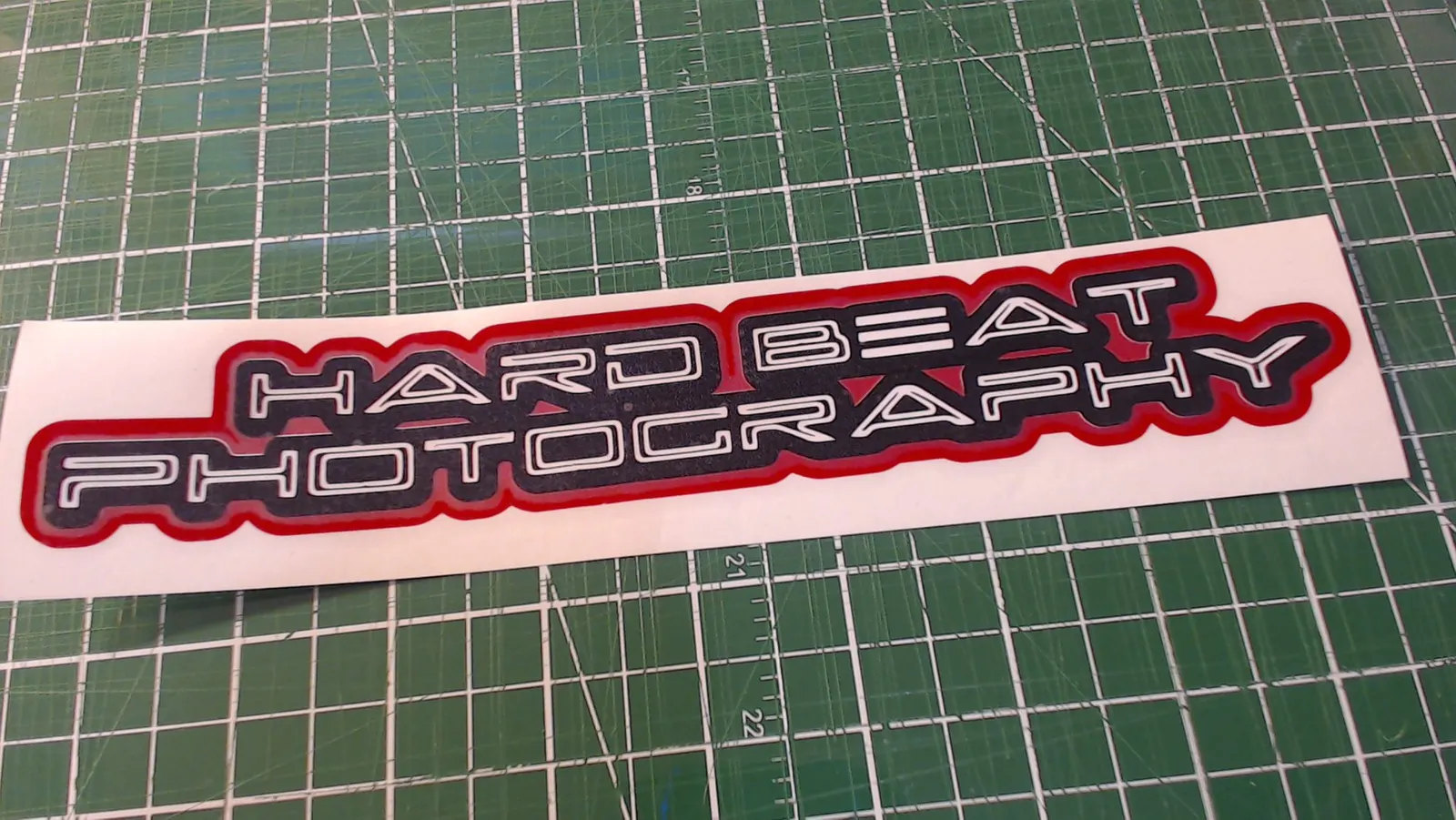
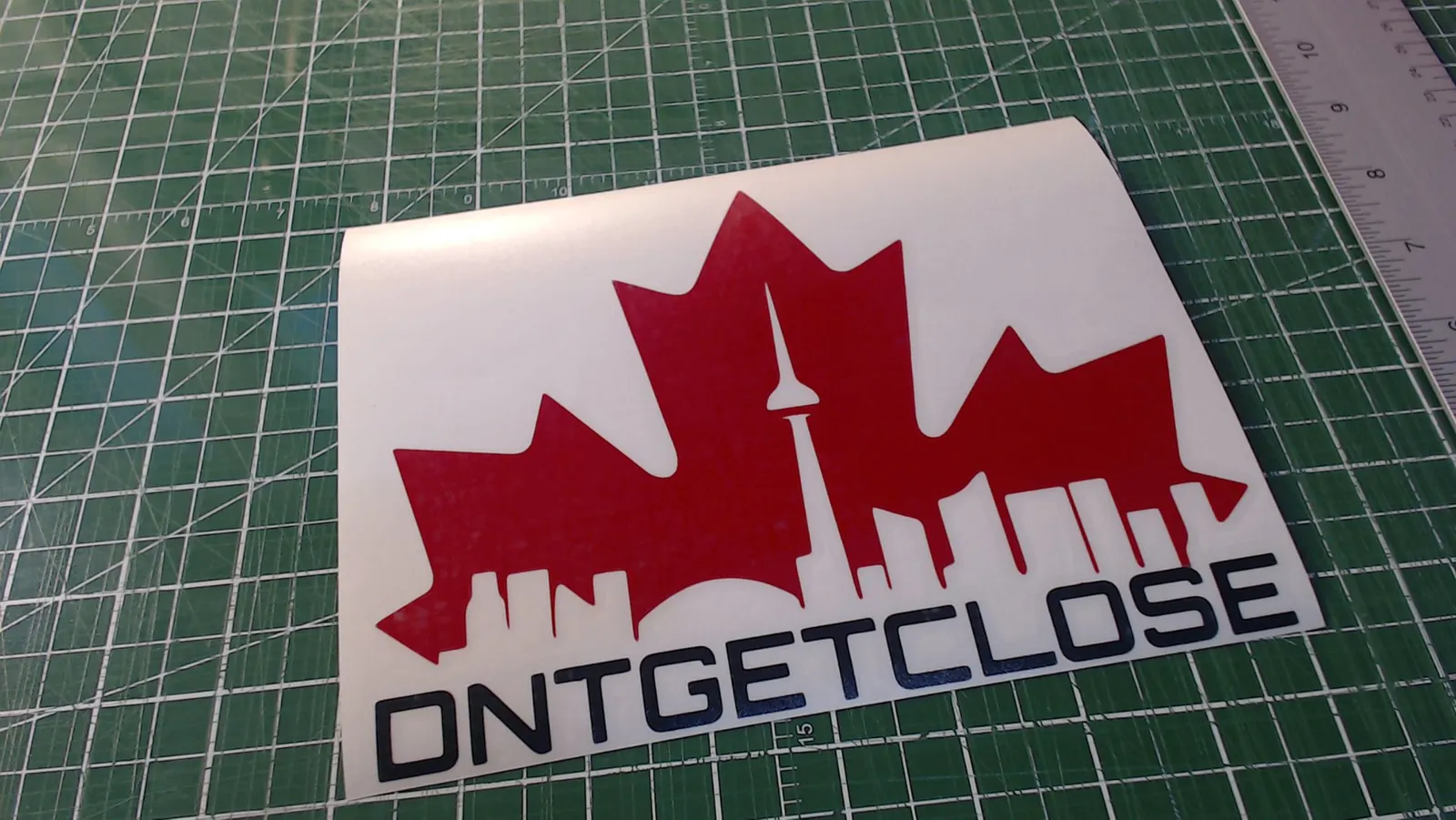
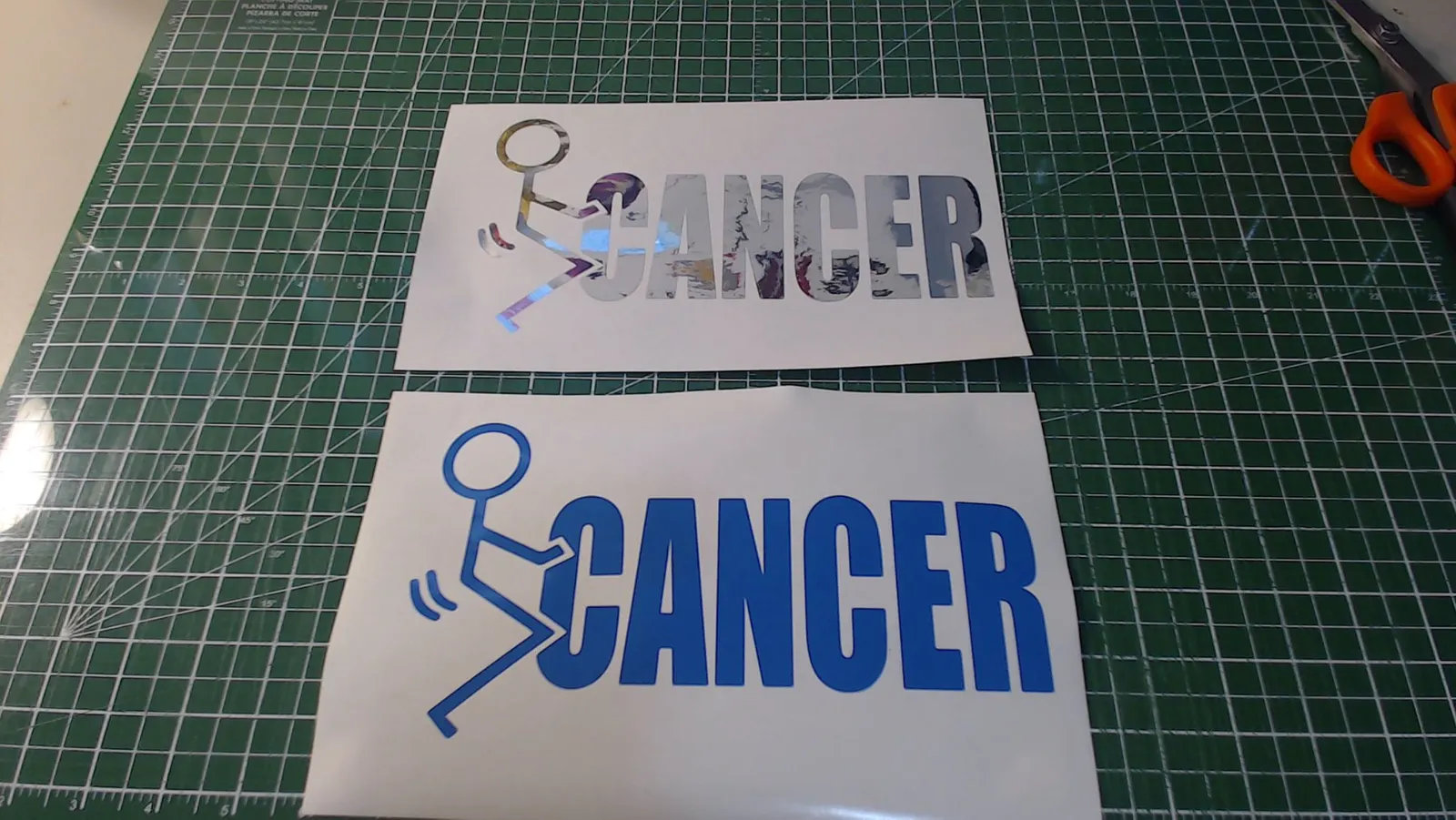
More of this work in the gallery →
Decals for your own car, truck, Jeep or toy
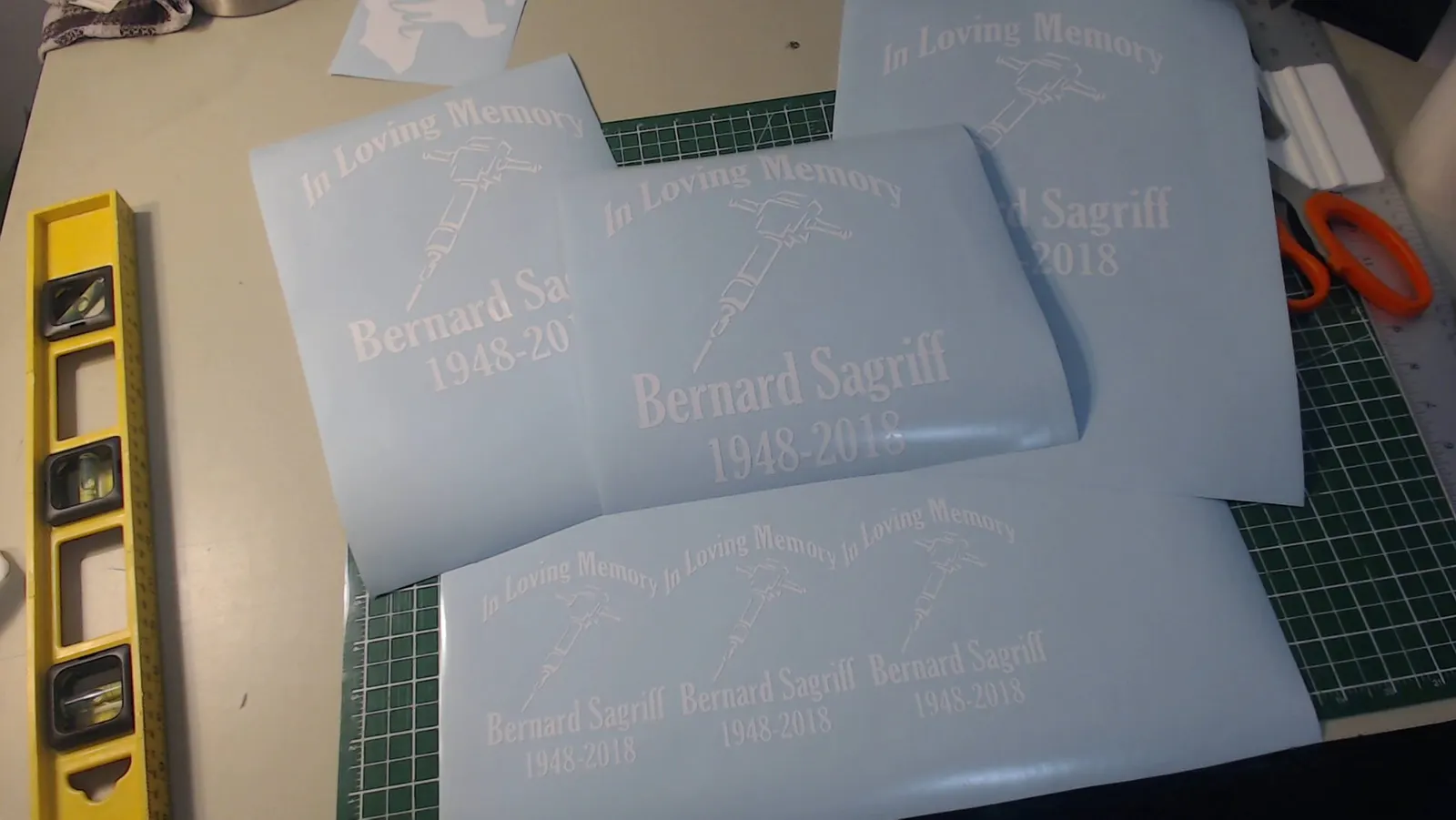
Most of the vehicle decals we ship are not for a company fleet at all. They are for somebody's own vehicle: a hood decal on a Jeep Wrangler, a pair of door decals on a Bronco, a logo on a golf cart, a name across a tailgate, a quote or a memorial on a rear window, side-mirror accents, a set of numbers for a track day, a graphic down the side of an ATV, a side-by-side or a snowmobile. Personal car decals, truck decals and off-road decals are cut and printed in our own shop in Ontario and shipped free anywhere in Canada, pre-masked with transfer tape so the whole design goes on in one piece.
Cut vinyl or printed — and when to layer
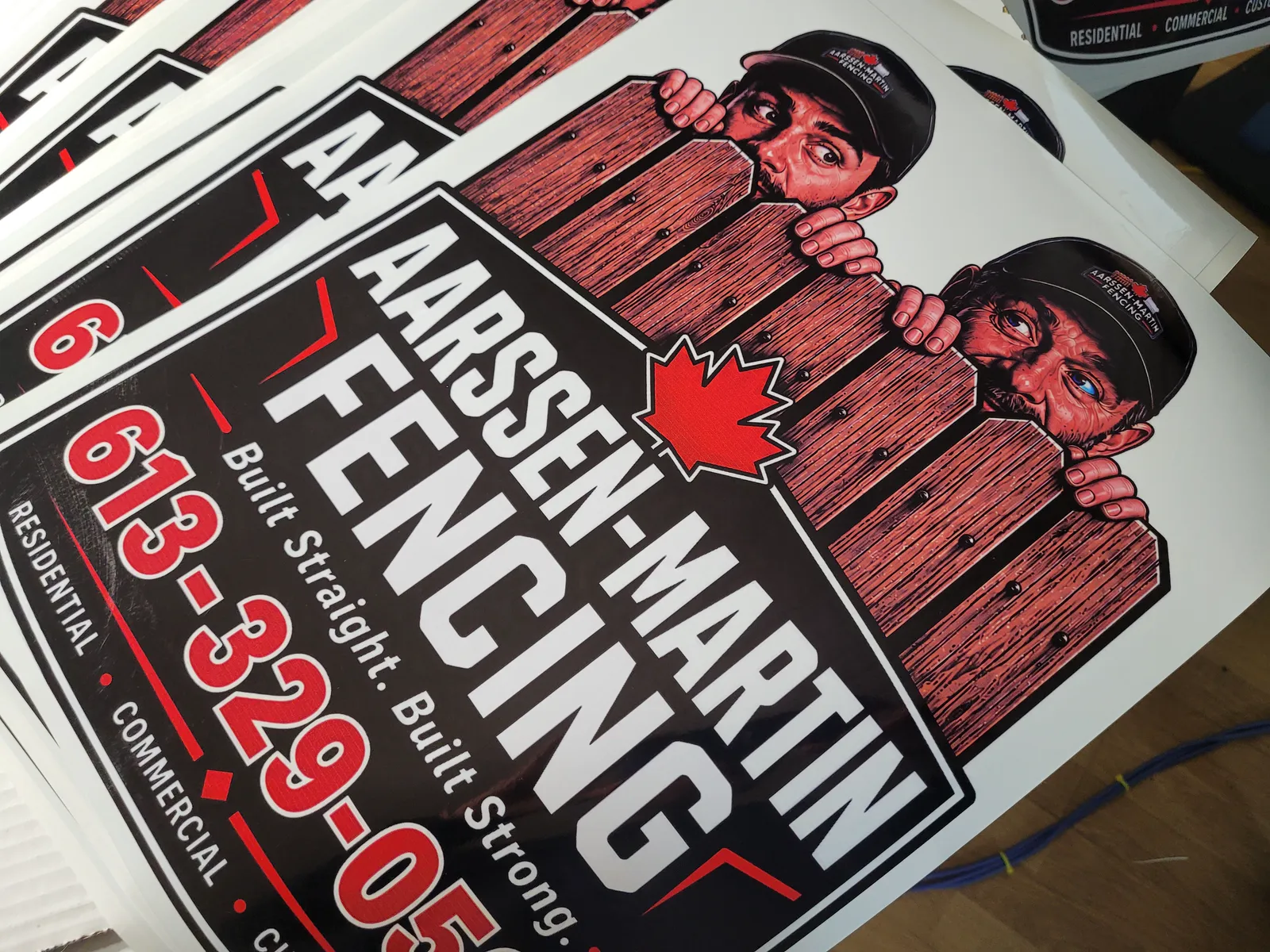
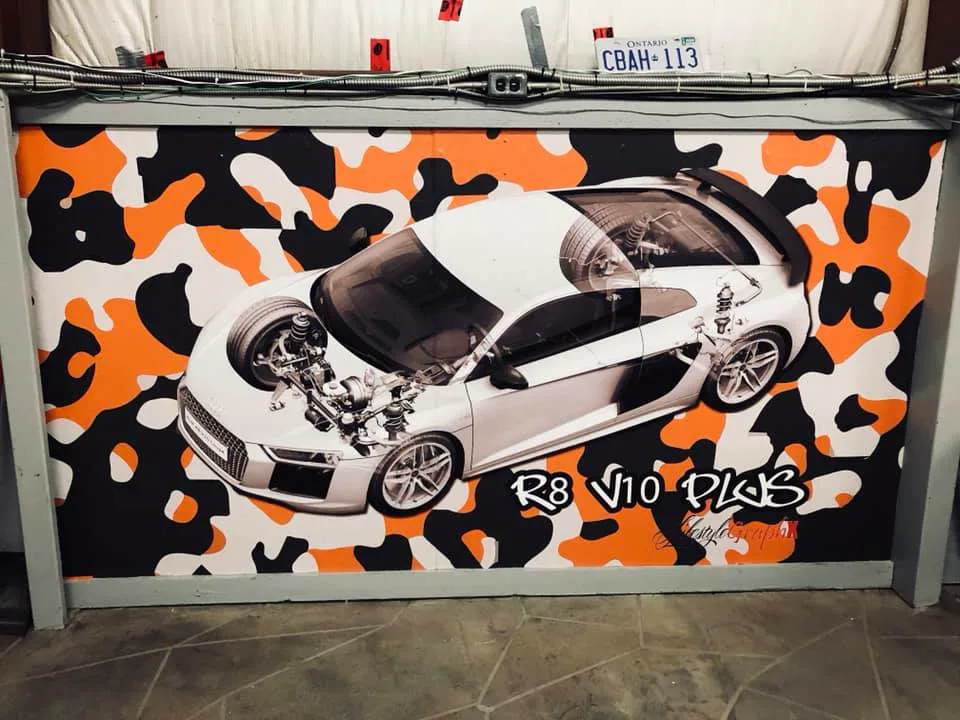
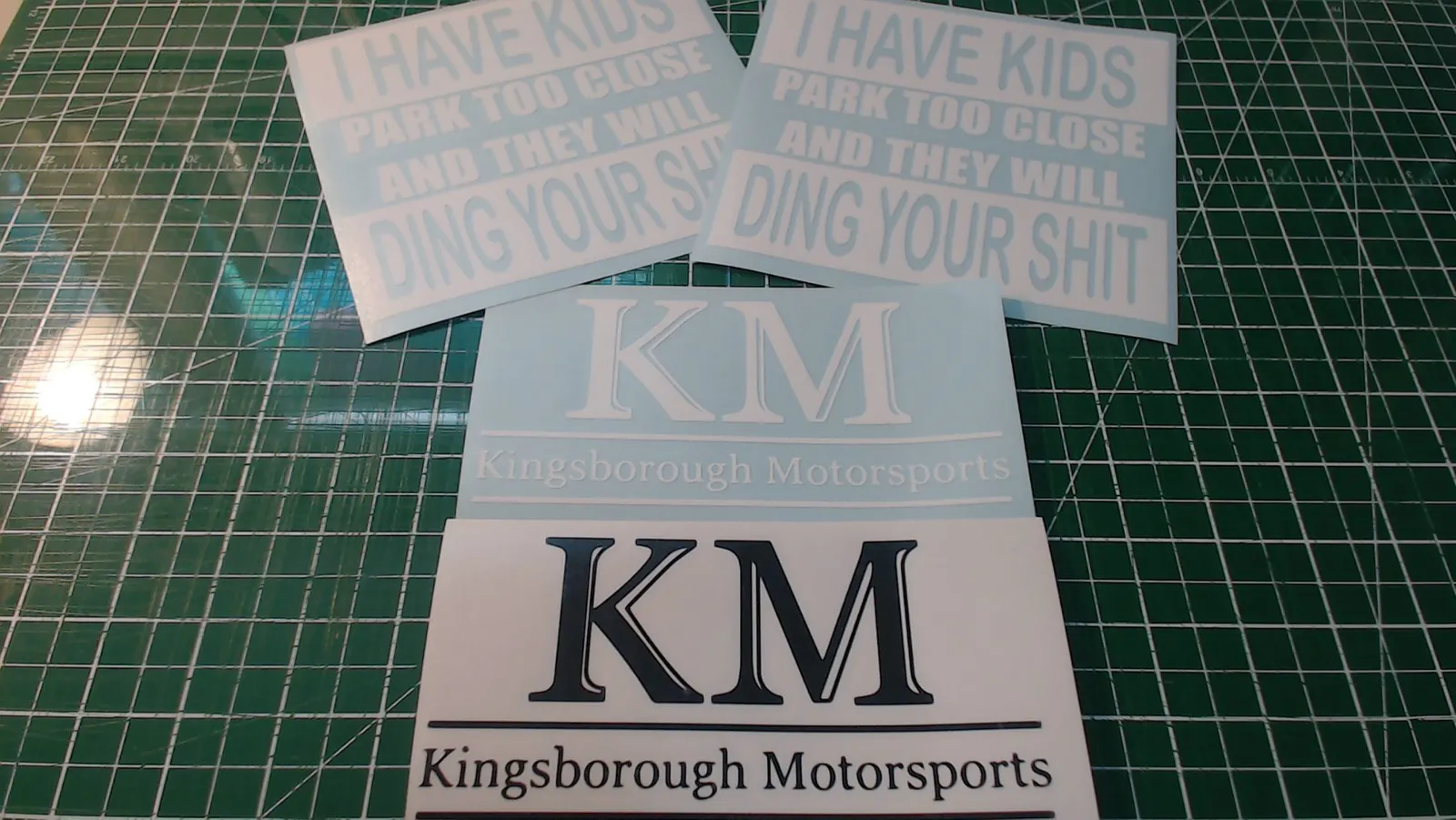
A single-colour design is cut from solid cast vinyl: there is no printed background, no edge and nothing to fade, which is why cut vinyl is the right call for lettering, logos, outlines and silhouettes. A design with two or three flat colours can be layered cut vinyl: each colour is cut separately and registered on one sheet of transfer tape, so it still applies as one piece. Photographs, gradients and a dozen colours become a printed decal, printed on vehicle-grade vinyl and laminated against sun and car washes, contour-cut to the shape of the artwork so there is no white rectangle around it. Not sure which your design is? Send it and we will tell you.
Matching your paint
Tell us the vehicle's colour — the name on the door sticker is ideal, Tuscadero Pearl or Shadow Black or Carbonized Grey — and whether you want the decal to contrast or blend. Vinyl comes in gloss, matte and metallic colours, plus specialty finishes such as brushed and carbon-fibre textured films; if your idea needs one of those, ask and we will tell you honestly what we can source for the size you need. Matte black on a dark vehicle reads as a shadow; gloss white or silver on the same car reads from across a parking lot. The materials guide explains the films; the proof shows you the colour against your paint before anything is cut.
What size looks right
A hood decal usually runs 10 to 20 inches across, a door or quarter-panel decal 8 to 15 inches, and a rear-window graphic about a third of the glass height so the driver still sees out. Small accents — mirror caps, badges, fuel doors, the sail panel behind the rear window — are 1 to 4 inches. Our size guide has the working rules; a photo of the panel with a tape measure held across it lets us lay the decal out on the actual vehicle in the proof instead of guessing.
Winter, salt, car washes and sun
Vehicles get cast film, not the calendered film used on flat signs. Cast vinyl has no shrink memory, so it lies down over curves, creases and rivets and stays there through a Quebec or Prairie winter — road salt, slush and freeze-thaw included. The one rule is at application: the panel must be clean, wax-free and above roughly 10°C, which in a Canadian winter means a garage. Leave it a day before the first wash; after that, hand washing is kindest, an automatic wash is fine, and the only thing to avoid is aiming a pressure washer straight at an edge. Oracal rates its cast film to around eight years outdoors.
Applying it yourself
Everything arrives pre-masked with transfer tape and a printed sheet of instructions. Peel the backing, line the piece up with a bit of masking tape as a hinge, squeegee from the middle outward, and peel the transfer tape back on itself slowly. Larger pieces go on with the wet method. The application guide walks through both, and through taking an old decal off factory paint cleanly with a hair dryer. In the Belleville, Quinte West, Kingston and Napanee area we can also apply it for you — see areas we serve.
Getting a quote
Email info@signs613.com or use the request form with the year, model and colour of the vehicle, a photo of the panel, roughly how big, and your design — a finished file, a sketch, a screenshot or an AI mock-up is all fine as a starting point. You get a proof on your vehicle's colour before anything is cut, and free standard shipping to every province and territory. Business lettering for work trucks and fleets lives on vehicle lettering and decals; boats on boat decals.
Common questions
How do I get a quote?
Email info@signs613.com or send the request form on this site — both land in the same inbox. Tell us the size, the quantity and where it is going, and attach your artwork or a photo. A real person replies with a clear price and turnaround. We do not publish a phone number; if you would rather be called, leave your number in the form and say so.
Do you ship across Canada?
Yes — standard shipping is free anywhere in Canada. Expedited shipping is available on request; tell us your deadline and we will quote it alongside the free option.
Will I see a proof first?
Always. Every job gets a proof by email showing size, colour, spelling and layout, and nothing is cut or printed until you approve it.
How long does it take?
Most decal, sticker and lettering jobs are made within about five business days of proof approval, plus shipping. Larger signs and installations are scheduled with you. In a hurry? Say so and we will tell you honestly what is possible.
What file format should I send?
Cut vinyl needs vector artwork — SVG, PDF, AI or EPS — because the blade follows the outlines in the file. A JPG or PNG has no outlines. Only have a photo of your logo? Send it anyway and we can redraw it as vector for a small fee.
Can you match the decal to my car's paint colour?
We match to contrast or to blend — tell us the paint name from the door sticker and whether you want the decal to stand out or sit quietly, and the proof shows the vinyl colour against it. Standard, metallic, matte and gloss films are in stock; brushed and carbon-fibre textured films can be sourced for many sizes, so ask.
What is the difference between die cut and kiss cut?
Die cut means the blade goes through the vinyl AND the backing, so the finished piece is the shape of your artwork. Kiss cut means only the top layer is cut and the backing sheet stays whole, so the sticker sits on a larger square you peel it off. One thing worth knowing: most online sticker shops selling "die cut stickers" mean a printed, laminated sticker cut to shape. What we cut here is solid colour vinyl with no printing and no background, pre-masked with transfer tape — on glass or a truck door there is no visible sticker edge at all.
Should I ask for permanent or removable vinyl?
Permanent vinyl uses a strong adhesive and is what belongs on vehicles, storefront glass, equipment and anything outdoors. Removable vinyl uses a lower-tack adhesive meant to come off cleanly after months rather than years — right for a seasonal promotion, a leased vehicle, a rented space or a wall you do not own. "Permanent" describes adhesive strength, not a life sentence: it still comes off with gentle heat and patience. Tell us how long it needs to last and whether it must come off cleanly, and we will pick the film.
Will a decal survive a Canadian winter, road salt and the car wash?
Yes, when it is cast vinyl applied to a clean panel above about 10°C — in winter that means a garage. Cast film conforms to curves and has no shrink memory, so salt, slush and freeze-thaw do not lift it. Wait a day before the first wash, then hand or automatic washing is fine; just do not aim a pressure washer straight at an edge.
What surfaces will a vinyl decal stick to?
Vinyl wants smooth, clean and non-porous. Glass, painted or enamelled metal, powder-coated panels, sealed or varnished wood, acrylic and smooth rigid plastics all hold well. Gloss and semi-gloss painted drywall is fine; flat paint is less reliable and heavy texture is a gamble. It will not hold on brick, concrete, stucco, raw or weathered wood, or anything chalky or flaking — there is nothing continuous for the adhesive to grip. Send a close-up photo of the surface if you are unsure and we will tell you before you order.
Will a decal damage my paint or my window tint?
Applied and removed properly, no. Vinyl sits on the clear coat, not in it, and comes off with gentle heat from a hair dryer, lifted at a shallow angle — never a blade, and never a heat gun held in one spot. Factory tint is inside the glass and is not affected. Aftermarket tint film is the exception: it is a film on the inside of the window, so put the decal on the OUTSIDE of a tinted window and it is a non-issue. Paint that is already cracked, flaking or freshly resprayed is the real risk — let new paint cure for at least a month first.
Can I send a sketch or an AI mock-up instead of a finished file?
Yes. Many personal decals start as a phone sketch, a screenshot of something you liked, or a mock-up from an AI tool. We redraw it as clean vector artwork for cutting — a small fee if it is more than a few minutes of work, and we tell you first — and you approve a proof on your vehicle's colour before anything is cut.
Can I put a decal on in winter?
Not outdoors in a Canadian February. Vinyl adhesive needs roughly 10 degrees Celsius or warmer to tack, and both the air and the surface have to be there — a sunny minus-five afternoon is still a cold truck door, and cold vinyl cracks instead of conforming. Bring the vehicle or panel into a heated garage, let it come up to temperature for a few hours, clean it with isopropyl alcohol and apply indoors. Then leave it a full day before rain, a car wash or a freeze-thaw cycle. Once cured, road salt and winter are not a problem for permanent vinyl; it is the first day that matters.
Can you cut any shape, any colour and any size?
Any shape your vector artwork describes, in any single vinyl colour we stock — standard colours plus metallic, matte, gloss, reflective, holographic and etched-glass finishes. Sizes run from roughly half an inch up to four feet wide on the roll, and larger again as tiled panels. The practical limits are at the small end: strokes thinner than about a sixteenth of an inch and text under half an inch are hard to weed and tend to lift. We check your artwork at the finished size and tell you before anything is cut.
Do you do decals for golf carts, ATVs, side-by-sides, sleds and dirt bikes?
Yes — the same cast vinyl, cut to fit the panel. Send a photo of the panel with a tape measure across it; plastic body panels are usually fine, heavily textured plastic is the one surface we check first. Numbers and names are cut as separate small pieces so a set can be changed one at a time.
How does a cut vinyl decal arrive, and how do I apply it?
In three layers: backing paper, your design in vinyl, and transfer tape over the top holding every letter in position. Peel the backing away, position the whole thing, squeegee firmly from the middle out, then peel the transfer tape back on itself at a shallow angle and the vinyl stays behind. Spacing and layout are already correct because the weeding was done here. Clean the surface with isopropyl alcohol first, not a household cleaner — wax and detergent residue is the usual reason a decal lifts later. Instructions ship in the package, and there is more detail in our decal guide.
How do I remove a car decal later without damaging the paint?
Warm it with a hair dryer, lift a corner and peel back slowly at a low angle; cast vinyl comes off factory paint cleanly. Any adhesive ghost wipes off with a citrus or isopropyl cleaner, and a polish evens out the slightly less-faded paint underneath. The application guide has the steps.
What if something is wrong when it arrives?
Custom work cannot be returned for a change of mind, because it is made specifically for you — but if it arrives faulty, damaged or not as proofed, contact us within 14 days with a photo and we will remake or refund it.